


How Women Are Shaping the Future of Sports
- Ashley Cornwell

- May 26
- 8 min read
Focused examination on innovation, leadership, and progress.
Women Changing the Future of Sports
For years, women in sports were treated like guests in someone else’s world. We never really fit in, and many women did not even believe that competition was a realm for women to participate in.
Women have spent years fighting for respect, visibility, and opportunity. The reality of where women exist in sports is changing. Women are no longer waiting for permission to lead sports culture within its current system.
To be frank, we will never get it. We will never be truly welcome in the original world of sports.
Women are not reshaping the world of sports; we are creating our own world of sports.
From coaching dynasties to professional leagues all performing on global stages, women are changing how sports are played, discussed, and understood. Figures like Dawn Staley and Odessa Jenkins are proving that leadership belongs to women just as much as men.
Leagues like the WNBA and NWSL are forcing audiences and investors to rethink old assumptions about women’s sports. Athletes like Simone Biles are redefining what strength and greatness truly look like, making it impossible to ignore women and what we can do.
All represent the creation of our own standards and values.
Dawn Staley and the Power of Being Unapologetic
Dawn Staley has become one of the most respected voices in basketball. Not just women’s basketball, but basketball as a whole. As a championship coach and former elite player, Staley has built her reputation on excellence, discipline, and honesty. When she speaks about the game, people listen. If they choose not to, that is their loss (trust me it is a big one).
Her influence matters because sports culture has historically treated men as the default authorities. Staley challenges that idea simply by occupying spaces where women were once overlooked or excluded. Yes, women are still underrepresented in women's sports. Reference my blog on Why Women Belong in Every Area of Sports, including coaching.
What stood out to me most about Staley’s comments was not just what she said about the NBA, but what her response represented. She showed the importance of valuing yourself enough not to beg for acceptance in spaces that refuse to fully see you.
Staley approached the opportunity as a qualified coach, not as someone asking for permission to belong. Her comments reflected the importance of recognizing when an organization or culture may not be ready to respect you beyond your gender. Rather than subjecting herself to environments that may only see her as “a woman coach” instead of simply a great coach, Staley reinforced the importance of protecting your value, dignity, and standards without apology.

Staley was asked about her candidacy and the broader question of whether a woman will ever become an NBA head coach. The conversation followed reports linking her to the New York Knicks coaching search, which sparked discussion about both the interview process and the barriers women continue to face in the NBA.
When asked about the interview process, Staley explained:
“I interviewed for the Knicks. It was the same interview that everybody else who was in their candidate pool got. Same thing.”
Reflecting on her performance, she said:
“I thought I did pretty well. I was well prepared.”
But perhaps her most powerful comment came when she was asked whether she believes an NBA team will hire a woman head coach in her lifetime:
“No, I don’t. And I hope I’m wrong.”
She later expanded on that thought by adding:
“The NBA has to be ready for a female head coach.”
What makes Staley important is not only the championships she has won, but the standard she has set. She has shown that women deserve a seat at the table, not because they are women, but because they are qualified. Just as importantly, she has shown that there is strength in refusing to compromise your worth for acceptance.
Odessa Jenkins and Creating Space Through Football
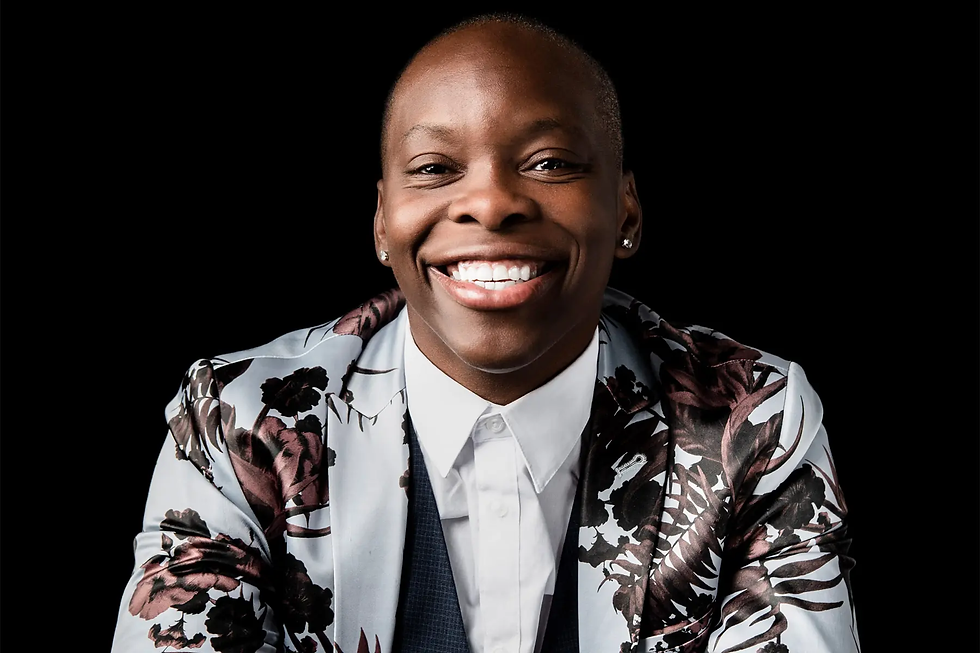
For generations, football has been treated as one of the most exclusive spaces in sports for women. Odessa Jenkins refused to accept that reality.
Through her work in women’s football, Jenkins helped create opportunities for women to compete, connect, and belong in a sport that often pushed them aside. Her work was not only about building teams, but it was also about creating a new community for women to find opportunities.
For many women, football became more than a game and has been like that for us for years. Now, it has become a place where women who love the sport no longer have to explain themselves or prove they belong. Jenkins understood that representation matters, but infrastructure matters too. True change happens when women create their own systems of support and leadership.
Her impact reaches beyond the field because she helped redefine who football is for. By creating spaces where women could fully participate in the sport, she challenged decades of assumptions about gender and athletic identity.
Jenkins continues to push women’s football forward through the Women's National Football Conference and initiatives like Her Game, a nonprofit focused on empowering and mentoring girls and women in football.
Readers can support these efforts by following the growth of the WNFC, engaging with these organizations, and helping expand visibility for women athletes, coaches, and leaders in sports.
The WNBA and the Rise of Women’s Basketball
For years, critics dismissed the Women's National Basketball Association while ignoring the reality that women’s basketball was often underfunded, underpromoted, and undervalued.
Despite that, the league survived and continued to grow.
Now the WNBA is entering a new era of popularity and cultural relevance. Increased media attention, rising attendance, and growing fan engagement have shown that audiences were always interested in women’s basketball. What was missing was investment.
The WNBA has also become one of the most socially outspoken leagues in professional sports. Its players have consistently used their platform to speak about race, equality, labor rights, and justice. That willingness to lead conversations beyond basketball has made the league culturally significant in ways many critics failed to predict.

At the same time, WNBA players have made it clear that respect is no longer negotiable. Athletes across women’s sports are taking ownership of their value and demanding to be treated as professionals deserving of proper investment, visibility, pay, and coverage.
During collective bargaining negotiations, players publicly pushed for stronger revenue sharing, higher salaries, expanded benefits, and better long-term protections that reflect the league’s rapid growth. WNBPA president Nneka Ogwumike explained that players wanted “a fair deal that represents our value in a very meaningful way.”
Players also challenged what they viewed as outdated systems within the league. In discussions about revenue sharing, Ogwumike stated that players wanted “a better share where our salaries grow with the business.” Those negotiations became something more than basketball. They reflected women athletes demanding recognition for the value they generate while helping establish a blueprint for other women’s sports leagues and programs to follow.
You can read more about the negotiations at Yahoo Sports coverage of the WNBA CBA negotiations
The growth of the WNBA proves something important about women’s sports. The problem was never a lack of talent or entertainment value. The problem was a lack of support from institutions that did not believe women’s sports deserved the same attention as men’s leagues.
That belief is finally starting to change.
The NWSL and the Fight for Accountability
The NWSL represents both the promise and the challenges of modern women’s sports.
The league has experienced major growth in popularity, attendance, and visibility. Fans have embraced women’s soccer with incredible passion, and players have become some of the most recognizable athletes in the country. But the NWSL’s story is also about accountability.
In recent years, players spoke openly about abuse, mistreatment, and failures within the league’s culture. Instead of remaining silent, athletes demanded change. That moment became larger than soccer itself because it showed women athletes refusing to accept harmful systems simply to protect the image of a league.
One of the clearest examples came after the release of the Sally Yates investigation into abuse within women’s soccer. The report concluded that “abuse and misconduct — verbal and emotional abuse and sexual misconduct — had become systemic, spanning multiple teams, coaches, and victims.” (Sports Illustrated) The findings led to major leadership changes across the league, including the resignation and removal of multiple coaches and executives, as well as new league-wide safeguarding policies designed to prevent future abuse.
Accountability in the NWSL has also extended beyond safety into compensation and working conditions. Through collective bargaining negotiations, players pushed for higher minimum salaries, improved benefits, and a stronger revenue-sharing model that reflects the league’s growing value. The result of these negotiations was a new CBA that included significant salary increases and improved standards across the league, marking a structural shift in how women athletes are compensated for their labor and success. The NWSL Players Association emphasized that “players deserve a system that reflects the value they bring to the league,” highlighting that financial equity is part of long-term accountability as well. (NWSLPA)
The NWSL demonstrated that progress is not only about growth. It is also about power. Women athletes today are demanding safer environments, stronger leadership, transparency, and fair compensation that reflects their contributions to the sport.
That shift matters because women in sports have historically been expected to tolerate problems quietly in exchange for opportunity. The players of the NWSL challenged that expectation directly and forced institutions to confront issues they had ignored for years.
Their willingness to speak out may become one of the league’s most important legacies.

Simone Biles and Redefining Strength
Simone Biles is widely considered one of the greatest gymnasts of all time, but her influence reaches far beyond medals and championships.
Biles changed the conversation around mental health in sports when she stepped away from Olympic competition to protect her well-being. In a culture that often celebrates athletes for pushing themselves beyond healthy limits, her decision sparked global debate.
One of her most defining statements came when she explained her decision, saying, “We have to protect our minds and our bodies.” (NBC News).
She also emphasized the pressure she was under, noting that she had to focus on “my mental health” rather than competing through distress (Reuters).
Some people viewed her choice as a weakness. Others recognized it as courage.
For decades, athletes were taught that greatness required silence and sacrifice at all costs. Biles challenged that idea. She reminded the world that athletes are human beings before they are performers.
Her impact is especially important for young women who grow up under intense pressure to succeed while remaining perfect, composed, and unbreakable. Biles showed that strength can also mean honesty, boundaries, and self-respect.
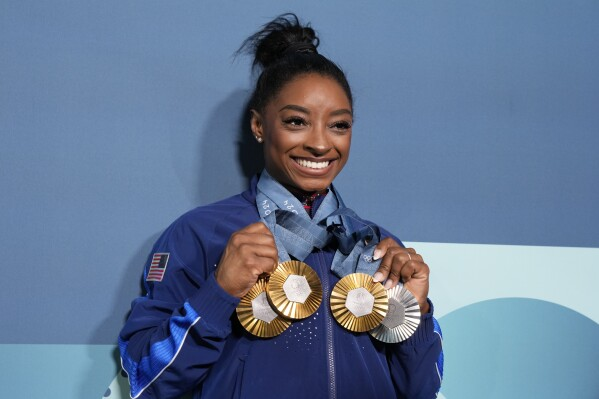
At the same time, she never stopped being dominant in her sport. Her return to elite competition, including her performances at the 2023 World Championships, where she reclaimed multiple world titles, reinforced that stepping back for mental health did not end her greatness — it strengthened it. (USA Gymnastics). This was followed by a stellar performance at the 2024 Paris Olympics.
That combination of excellence, vulnerability, and return to dominance changed how many people define greatness itself.
Conclusion
Women are changing sports in ways that can no longer be ignored. They are coaching championship teams, building leagues, challenging institutions, and redefining how athletes are viewed.
Figures like Dawn Staley, Odessa Jenkins, the WNBA, the NWSL, and Simone Biles represent different parts of the same movement.
What connects them is not simply gender. It is creation and a “reality-bending optimism” that we have previously discussed.
All are proving that women belong at the center of sports.

Comments